Small House Exterior Paint Design
It's a known fact that the color of a room will impact how you feel when you spend time in that space. But many don't realize the same applies to exterior house colors . You don't have to be in a room, surrounded by a particular color, for it to affect your mood. Join us as we review 50 house colors to convince you to paint yours.

A neighborhood filled with nondescript beige-colored homes would not be visually appealing. As far as exterior house colors go, this one does not have a calming sense of home like a light blue Wisconsin farmhouse would, for example. While many might advise you to choose beige for its neutrality, you shouldn't hesitate to go bold instead.
Which is the best exterior house color?
While the geographic location may influence your decision considering exterior house colors, meanwhile, less popular shades have emerged and are becoming more popular.


Before you pick an exterior color for your home, be sure to check with your homeowner's association (HOA), if you have one, because there may be restrictions on which colors you can choose. Here are the most popular options:
White
Especially in the US, white is a classic and timeless hue among exterior house colors. Remember, you don't have to choose the brightest white as a range of hues are available, depending on how warm or cool you want your shade of white to be.
Off-White
An equally popular exterior house color is off-white, and is available in a wide variety of hues. Choose an off-white that blends well with the accent colors you'l use for the trim, shutters, or othe exterior parts. You can achieve a healthy contrast with a bold front door color.
Yellow
Immediately perceived as a joyful color, yellow popular among all exterior house colors, but restraint is necessary. Anything too bright can seem garish, so it's safest to stick with pale or mild, buttery yellows.
Light Blue
With light blue, it doesn't matter where your house is located as it is one of best exterior house colors. It's a serene color that fits well with home styles and one that most people find aesthetically pleasing.
Gray
While gray may be waning in popularity as an interior paint color, it's still a winner for home exteriors. It pairs so well with other colors, a wide range of choices are available should you want to accent it with other colors.
Blue Gray
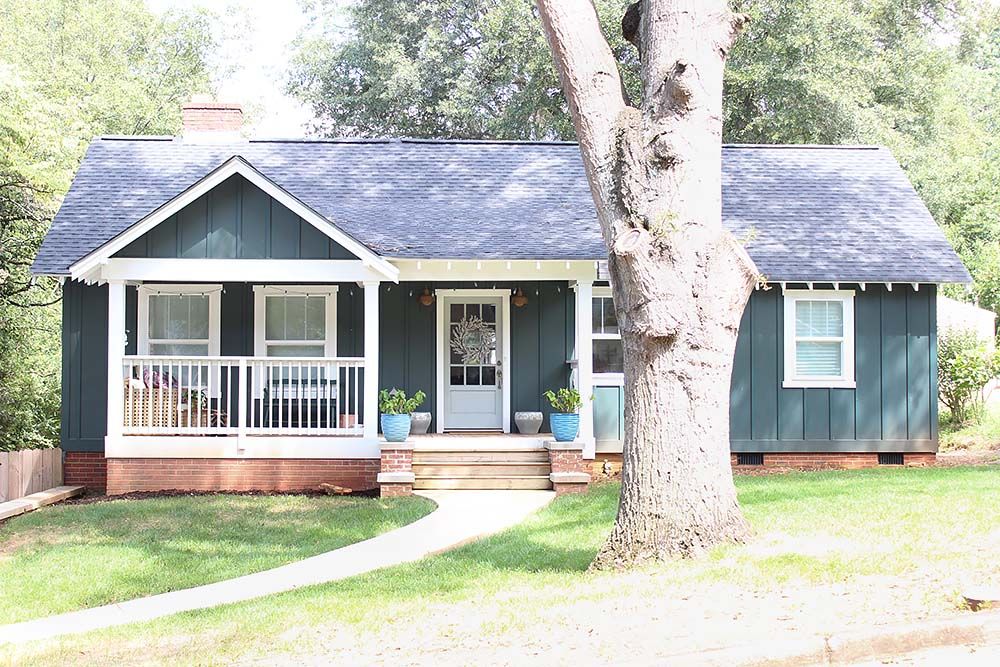
Darker hues are having their day as an exterior house color, and moody gray-blue hues are prime examples. Whether you opt to go deeper or stay with a lighter shade of blue-gray, you'll have a versatile color that looks great, for example, with white trim.
Taupe
Neutrals are a classic choice inside and out. Choosing a taupe hue as your exterior house color opens up a wide range of options for trim and color accents. Neutrals are an especially good choice if a resale is in the near future.
Putty
Some people interchangeably use taupe and putty, but these days, putty is associated with greige. Putty can have gray undertones or it can be a real gray tone mix with other shades. The colors in this category are neutral and work especially well with stone.
Wheat
This is another shade often included with off-white or taupe, yet has more yellow than taupe. As a light exterior house color, it pairs well with brown hues but would also look great with grayish blue.
Brown
Darker, earthy shades of brown are best as an exterior house color as lighter hues are drab and boring. Brown hues need a brighter counterpoint to look livier, so opt for colors like bold red, blue, or black for the front door or other accents.
Green grayish green hue
If you're sold on a green exterior, select a hue that won't blend in with your lawn. The right shade makes for a stunning, contrasting hue for white and dark trim.
Red
Red is another cheery hue that can be anything from a bolder farmhouse barn red to an earthier shade that skews toward terra cotta. This exterior house color is an example of how geography influences exterior color choices: In the southwestern US, you're more likely to see earthier red hues.
How do I choose an exterior color combination?
Other than selecting exterior house colors, the outside of your home should feature hues that complement its surroundings. The color should also improve your home's curb appeal, especially if you'd like to sell it before repainting it. Take your time as this is a big decision. Choose a color you'll be comfortable with for an extended period.
 View in gallery
You'll need more than one color option as a secondary color will be necessary for the trim and possibly a third for other exterior accents. It's a good idea to consult with your paint store or painting professional on which colors match the best. A few things to consider when selecting a color include:
- The size of your home. Just as light and dark paint colors have an effect on your home's interior, the same is true for exteriors. Lighter shades will make your home appear bigger, changing in natural appearance throughout the day, according to sunlight and the sun's position. Darker colors can help a house blend in with its surroundings and can make its structure seem smaller.
- Home architectural style. Your color combinations should also complement your home's architectural design. For example, the color palette used on a Victorian-style house with intricate gingerbread detailing will not work for modern or traditional suburban homes.
Which exterior house colors have positive energy?
 View in gallery
According to the Chinese practice Feng Shui, colors represent feelings and moods. Choose a color you admire and consult color charts or energy patterns that interest you. The main thing to remember is you don't have to paint your entire home with a suggested color. The trim, accent, or color in landscaping is enough.
According to Feng Shui principles, the position of a home will influence which colors should be used. Here are some of the directions and colors to consider, along with their significance in this theory of arranging your living spaces in a way that is in balance with nature. As per the Feng Shui Pundit, consider these exterior house colors.
- North Facing. The element associated with this direction is water, and the colors to use are black, dark blue. This combination is said to influence wealth, success, and career trajectory.,
- Northeast Facing. This direction is connected with Earth and the relevant colors are Black, blue, and green. These colors are believed to connect with education and personal power.
- East Facing. Homes that face the east are ties with wood and should use colors like green, turquoise, and aqua. This combination of direction and colors is tied to family harmony.
- Southeast facing. Also associated with wood, these homes are best when painted green or blue, but also purple or red. These colors are tied to growth and wealth.
- South facing. Homes facing south are associated with fire and are best with color choices like red, yellow, or orange. These warm hues are associated with fame and recognition.
- Southwest facing. This orientation is also connected with the earth, but the best colors are red, pink, and white. Marriage and relationships are the life aspects involved in this direction.
- West facing. Associated with metal, homes facing in this direction should have white, silver, copper, or brass at the front. Fertility and creativity are connected to this direction.
- Northwest facing. Also connected with metal, homes facing northwest should incorporate white, gray, blue, or black. The characteristic associated with this direction is empowerment.
What are the new trends in exterior house colors?
 View in gallery
As we've covered popular colors, there are a few emerging contenders that deserve attention. These trending exterior house colors are wonderful to incorporate if you're planning to paint your house in the near future.
Black
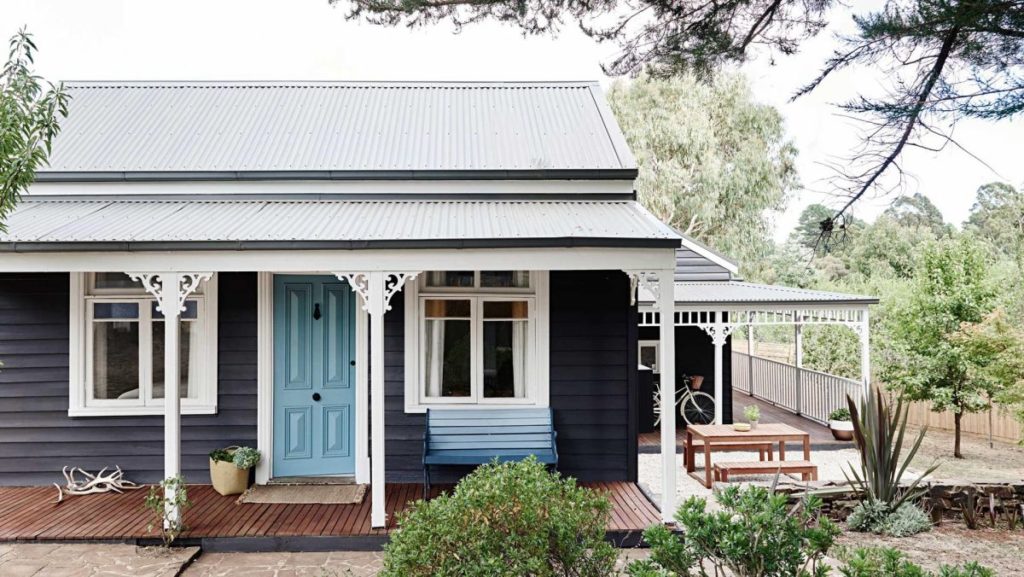
Definitely not a traditional house color, black exterior house colors are becoming more common as homeowners embrace a more modern look and dark shades that help a house stand out from the cul-de-sac crowd. This color can also make the surrounding plants and landscaping pop. If you like the idea but don't want to paint the whole house black, use it to create a bold focal point by painting the front door black or updating your shutters with this trendy color.
Charcoal
A step lighter than black, luxurious shades of dusty charcoal are fabulous for updating the look of an average house. As an exterior house color, it's more adventurous than usual but not as bold a solid black. Charcoal also gives you a wide range of options for accent colors for your front door.
Warm White or Cream
Toned-down shades of white are a subdued, neutral option that is gaining in popularity.
The creamier colors are a great counterpoint for bold hues and offer a sophisticated appearance.
Vibrant Green
When considering green, think rich and opulent. Their variety of exterior house colors play on the attraction to nature that has taken a front seat in recent years. Be cautious with paler greens that look a little faded from the get-go, and pick a shade with some real personality.
Gray-Greens
In step with the trending preference for moodier exterior house colors, gray greens are a wonderful choice because the shade is very calming. It also hits the range that is complementary to foliage and doesn't compete with the natural environment.
Navy Blue
This hue is a classic, but it is finding renewed out of all exterior house colors this year. It is particularly complementary to wood and to creamy accents. If plain navy is a little too basic for you, moving toward the gray range, which gives navy a moodier feel, is a similar option.
How much does it cost to paint a house?
 View in gallery
The DIY route to painting home exteriors is a commitment in both time and effort, which is why homeowners who are avid interior painters tend to leave the exterior painting to the professionals. When you want your home's exterior painted, it can be a substantial expense depending on a number of factors:
- Home size.
- Amount of siding and trim.
- Architectural details.
- Type of material covering the home.
- Type of paint.
On average, it costs from $3,500-$7,000 to paint the exterior of a house, according to Fixr.com. The average homeowner ends up spending about $5,362 to paint a home that has 1,500 square feet of wood siding and includes trim that requires prep work. Obviously, this applies to larger homes. Those that are three stories tall and have architectural detailing cost more. Other factors that will affect the price of a house paint job are:
- Geographic location.
- Condition of the exterior material.
- How easily painters can access the sides of the house.
- The type of exterior paint.
How to paint a brick house
There was a day when brick homes were what everyone wanted; however, times changed, and although brick is super durable, it may not be the most stylish or on-trend option today. A new coat of paint is a fast way to update brick. Although not everyone is a fan of painted brick, there are good reasons for this choice:
- It's affordable. Replacing the brick is not a budget-friendly option.
- Paint can lighten the visual aesthetic of the home.
- Painted brick can have more curb appeal and hence a better chance of good resale.
Similar to painting any type of home exterior, painting a brick house is also a big job, with probably some extra prep work. Again, you can choose the DIY route, especially if only part of your home is brick. Just note: Bricks have a reputation as being very difficult to paint because they are porous and absorb paint.
Clean the brick.
- For the paint to adhere to the brick, it needs to be completely clean and dry before you start applying it. The easiest way to clean brick is with a pressure washer. Otherwise, you'll need to rely on good, old-fashioned scrubbing with soap water and a brush with stiff bristles. Keep in mind that newly installed brick should not be painted for at least one year.
- If the brick is dirty, you'll need something stronger, such as trisodium phosphate (TSP). Just mix a half-cup of it into a gallon of water. If you find mildew anywhere on the exterior, mix one part of bleach with three parts of water. Let the solution soak on the brock for about 30 minutes, and then scrub it. Don't use an acid to remove the mildew, or the paint may not stick properly.
- Fill any damage or cracks with acrylic caulk. If there's more serious damage, consult a mason about repairing it before you paint.
- What at least 24 hours between cleaning and painting, so the brick has a chance to thoroughly dry out.
Put on the primer
- Latex primer can be applied in a number of ways, including a brush or roller.
- If you need to cover large areas, consider a paint sprayer. When using a sprayer, you'll have to cover the doors, windows, and anything else that you don't want to paint with newspaper and painter's tape.
- If you cleaned any mildew, be sure to apply a few primer coats on those spots.
- Allow the primer to dry.
Pick the paint.
- In general, most people use plain acrylic latex exterior paint for brick. It holds up well against mildew and evaporates moisture. Some prefer to use a paint that is more elastic, called elastodynamic because it is particularly good for filling and preventing cracks and does very well in high humidity environments.
Paint the brick
- Just as it is with the primer, you can use a roller with a thick nap and brushes to apply the paint, which is good if you don't need to cover a huge surface. Otherwise, it pays to invest in or rent a paint sprayer. Use just one coat of paint over the primer unless your paint specifies two coats.
How long does it take to paint a house?
 View in gallery
The average-sized house takes a team of two to three people about three to four days to paint. Of course, this is assuming the house has one or two stories and four or fewer bedrooms. A three-story house, or one that has five or more bedrooms will need five to six days for the painting process. Just as with the price, the time and steps required to paint the house will also be affected by a number of factors.
Cleaning
Cleaning the surfaces to be painted is a mandatory step in the process? Power washing the exterior walls is to get rid of dirt, mildew, pollen, and loose paint, and contaminants are key to achieving a smooth, even, long-lasting paint job. A full day has to be allotted for power washing. Even though it doesn't take an entire day, it has to dry thoroughly before you can begin painting. Wood siding might take a little longer than a day to dry completely.
Preparing the Surfaces
This is a big "if" in the process. If the home has peeling paint and needs any stripping or priming, the process will take at least a day longer. If the additional prep work is substantial, it could mean several more days.
Painting
Proper painting, assuming good weather, will take two or three days on average and seven to ten days for a large house with plenty of detail. Rain – especially heavy storms – will definitely add to the time required to complete the house.
The length of time for the process alone is enough to keep homeowners from taking the DIY route: If it takes a professional crew of three about a week — 120 man hours — to paint an average house, the DIY job will take much longer.
How Often Should I Paint the Exterior of My House?
 View in gallery
This is probably the most common question about exterior house painting. Of course, it depends on the climate and weather conditions where you live, but according to Five Star Painting, you should expect to repaint the exterior about every 10 years, but it might be as little as seven years.
- The quality of the previous paint job will affect its longevity.
- Poor prep work will cause the paint will degrade in a few years.
- Temperature and humidity will affect how the paint adheres and dries.
- The type of paint and how many coats were applied affects durability.
- Darker colors absorb more light and heat and will fade faster.
If you're considering painting the exterior of your house, here are some signs that it's time to do so, according to Certapro.
The exterior shows wear and tear. If you see cracks, bubbles or peeling, the paint isn't staying attached to the surface and is allowing moisture to get in underneath. This is not good and can indicate moisture damage forming.
The color of the paint is fading. Physically, fading paint is not dangerous but it certainly makes a house look old and worn out. The fading comes from years of un exposure, which affects the pigments in the paint.
It's time to sell the house. If it has been a while since the house was last painted, a freshly done exterior can really boost curb appeal. Depending on the market conditions, your real estate professional should be able to tell you if the cost of painting is worth the potential benefit.
You see gaps around doors and window frames. Gaps occur where the house looks like it is separating from the door and window frames. You definitely need to caulk the spaces to prevent water from getting in, but it will likely be time to repaint too.
The caulk has cracked in places. Over time, caulk can dry out, become brittle, crack and then fall out. Even if you have used calk that is paintable, you'll have to paint it after any repairs are made.
It's simply time to paint.
Even if your home doesn't look like it needs to be painted, after ten years, you will still need to paint it. It will be easier and more efficient to repaint while your home is in good condition rather than waiting until it is in bad shape.
With so many exterior house colors to choose from, the only thing you need to do is decide how you want to feel when you arrive home at the end of each day, and select a color based on that feeling. Take a look at these 50 exterior house paint color scheme ideas that will convince you it's time to give your home a makeover.
Craftsman house style color
Craftsman style homes have such interest in their architecture and deep porches that allow for swings and potted plants. Painting your home a dark blue shade will bring out the details and make your porch the most inviting place to escape the summer sun.
 View in gallery
Blue: Serenity in a Can
That's essentially what dark blue represents. The psychology of this color evokes feelings of calm and loyalty, which is appealing in a home color. On certain styles of homes, such as this craftsman, it can also give the structure a nautical vibe, making it perfect in areas near water.
 View in gallery
It is not uncommon to find a craftsman styled house on a farm. However, you don't need a farm if you want red house color schemes. The eye catching color will still make your exterior feel traditional and down home-y.
Red: A Way to Stand Out
In some ways, red is a traditional color: think red barns and brick homes. One thing is certain, red is an energetic color, however, it also signifies warmth and comfort. These are both qualities that are desirable in a home. If you want to paint your home red, then don't hesitate. Of course, we're not talking about lipstick red. There are many shades of red, ranging from those with a rusty brown undertone to hues that tend more toward orange.
 View in gallery
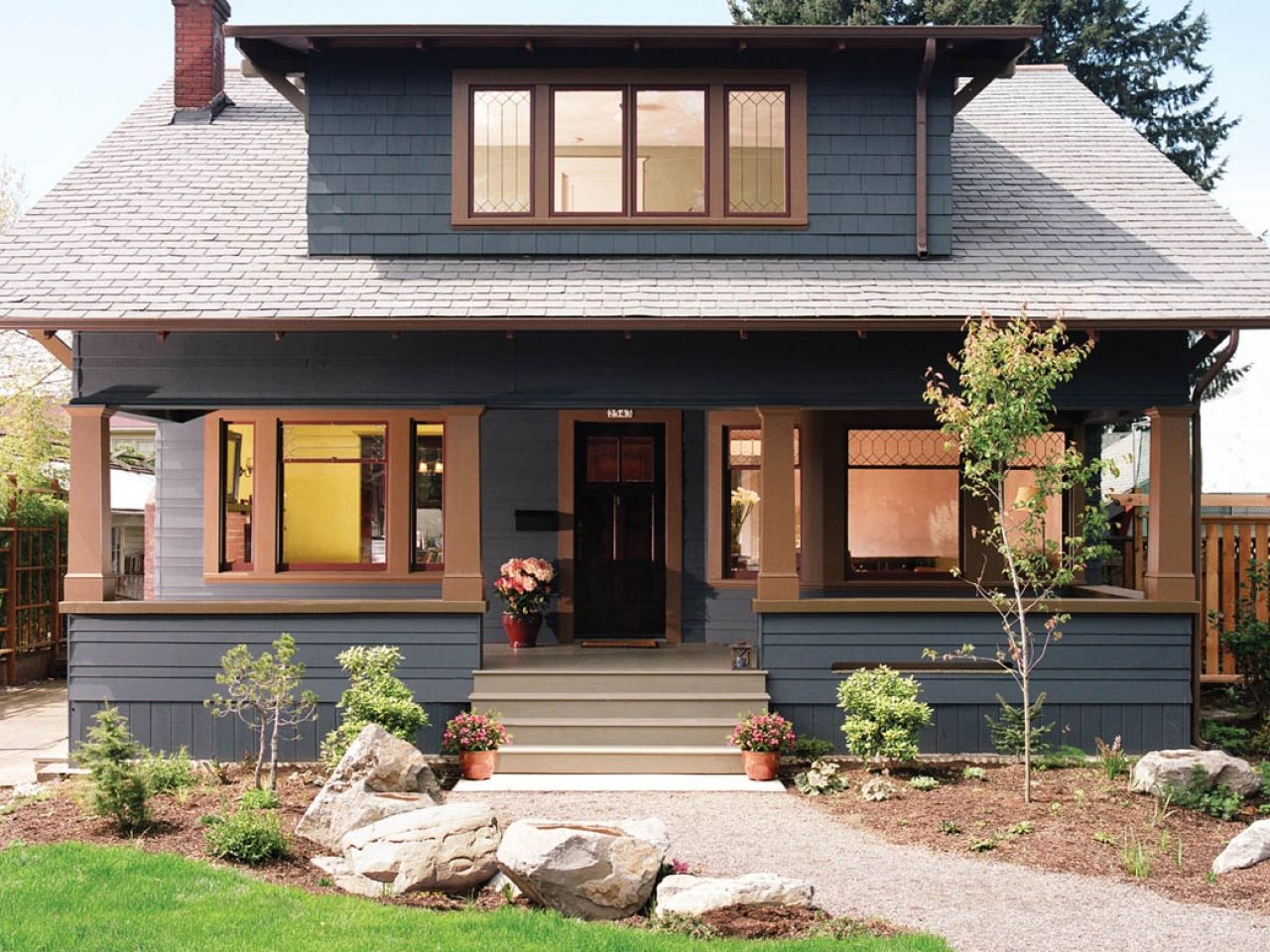
Black is probably not a color you would choose by yourself, but seeing how much it adds to a house might change your mind. It can easily take an old craftsman design with good bones and make it feel updated and modern, and with just one coat of paint.
Black: Highlight the Details
For some, choosing black as an exterior house color can be controversial. Out of all traditional exterior house colors, this one is the least popular, but it can be an ideal choice when you want architectural details to stand out. You might not want to paint a traditional suburban home completely black, but on a craftsman or modern style it can make a dramatic and appealing difference.
 View in gallery
Who wouldn't love to live in a yellow house? Yellow is pleassing all exterior house colors. Since craftsman style homes have so much trim, the white and yellow shades together will make the exterior seem so bright and fresh.
Yellow: Project Warmth and Cheeriness
Start paying close attention and you'll find that yellow homes are common and with good reason. They can stand out without being too different and they bring about feelings of cheeriness and optimism. That said, the most common shades of yellow for the exterior of a house are actually the more buttery tones as opposed to a strong primary yellow. In fact, according to Bob Vila, yellow is a great color for resale.
 View in gallery
You just can't get away from millennial pink, even in an article about exterior house colors. But if your craftsman home is near the ocean or even a lake, that soft rosy shade can give you all those beachy vibes and make your home the prettiest one on the block.
Millennial Pink: It's Here to Stay
While you might think millennial pink is just a trendy hue, it has been around for awhile when it comes to exterior house colors. Probably the best example is the Victorian style, where the soft hue is a gentle but effective way to highlight the intricate gingerbread trim all around the house. Ideal for setting off the lines of a craftsman home, it's also found on beachside bungalows and in brick form on other homes.
Green might be the safest exterior color apart from beige. Such a calming shade will blend with whatever landscaping you have and look great in the background of all your Instagram selfies. It might even act as some stress relief as soon as you arrive home from work.
Green: The Rich Color of Nature
Absolutely perfect for craftsman style homes, hues of sage and olive are a great choice for your home's exterior. This nature-focused color not only feels, earthy, but it also creates a feeling of tranquility and health. Whether you choose a light shade or a dark one, avoid choosing a grassy green or other shade that blends too seamlessly with the yard and trees, which can make your house disappear into the landscape.
 View in gallery
Gray might seem as boring as beige, but not on a craftsman. With all that bright, white trim, a darker gray exterior will give your home a lift, and feel more contemporary without leaving traditional behind.
Gray: As Versatile as a Little Black Dress
While gray may be overdone as an interior, it's still going strong as an exterior house color that can distinguish a home. It's neutral style makes it ideal to pair with almost any accent color. As with any hue, the range of shades allows you to create the feel you want: elegant light or medium tones for a timeless feeling, or a dark, moody shade for dramatic effect. 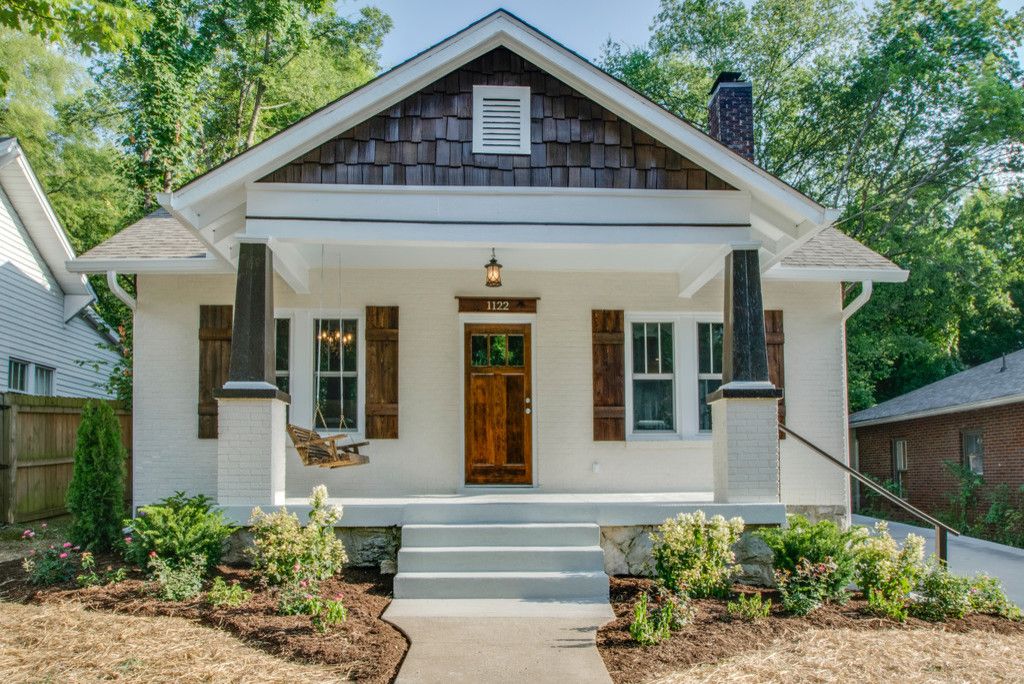 View in gallery
Sometimes, there is nothing wrong with white. White is fresh and freeing. White is classy and neutral. Painting the exterior white gives you a completely blank canvas to start with. White will let your mind wander into the land of shutters and trim and landscaping because that's just where the road goes.
White: A Classic That Goes With Everything
It might be basic, but it's popular and doesn't have to be boring. Painting your house white can be a great choice, especially on a craftsman where it can help emphasize trim or architectural details. Just as white kitchens evoke feelings of cleanliness, a white exterior does the same. It's as crisp and classic as a white shirt and always a classic option for your home..
 View in gallery
Brown doesn't have to be beige. Consider brown wood siding on your home. Especially on a craftsman style, it doesn't get more traditional. Your home will immediately feel old and traditional, even if it was only built recently.
Brown: It Doesn't Have to Be Boring
Brown has sometimes gotten a bad rap in fashion and homes, usually because of the shade chosen and not because it's brown. Darker, earthy shades with different undertones are a great color for homes because they make people feel safe and secure. Of course, wood siding and shingle exteriors can also be brown and these are always popular. Shades of dark brown are also a perfect pairing with colored shutters and other exterior details.
 View in gallery
Not quite ready to give up your beige yet? Go with greige instead. This particular shade of gray feels very warm and cozy yet it won't stand out too much against your neighbors dusky brown homes. Just the kind of subtle statement you're looking for.
Greige: The Best of Both Worlds
Some people consider beige boring but it was indeed just chosen as one of the colors for 2021. At the same time, gray has crept from its trendy interiors to exterior house colors. A hybrid option is greige, which is a mix of the two colors. It's a trending neutral and depending on the light, can look like one or the other. In general, it has more pizzazz than basic beige and can blend easily with trim from wither color family.
Contemporary house style color
When it comes to contemporary homes, most of the time, glass comes to mind and is probably accompanied by white or gray exterior house colors. In fact, a contemporary home can be a great canvas for highlighting different textures and showcasing color, and houses with a largely neutral palette are no exception. Design details and materials like stone or brick can be a great launchpad for creating a look for the entire exterior. Colors that accent or highlight those materials and the patterns they create are fabulous options.
Related: How to Achieve a Contemporary Style
 View in gallery
Contemporary homes are visually interesting due to the vast windows, linear style and mix of colors. Black is one of the most common exterior colors for this style because the deep shade lends to the modern look that the owner is obviously shooting for. Everything about it just feels new and chic.
 View in gallery
Gray is another great modern option for contemporary homes. The hue gives the exterior that industrial feel, and if you have rustic metal, you'll find that gray will complement it perfectly.
 View in gallery
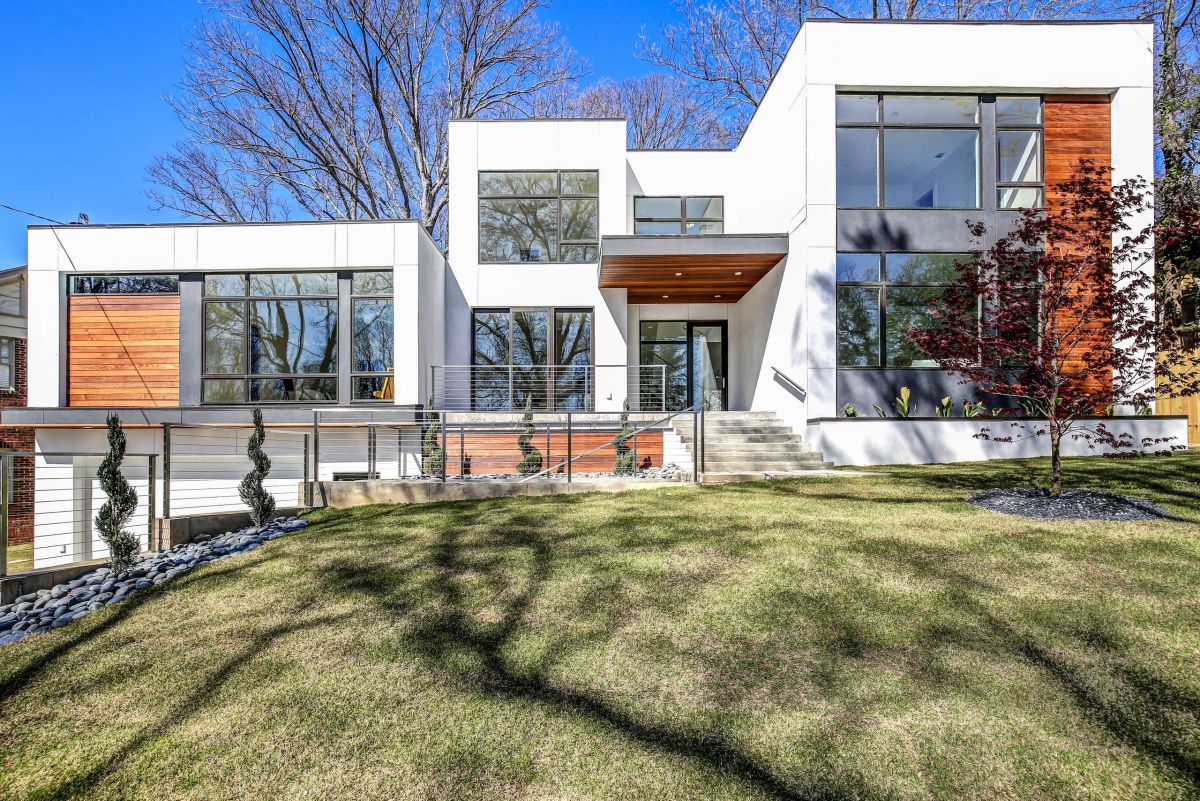
Of course white is also a choice, especially for a contemporary exterior house color. It gives your home a minimalistic look that is often what you'll find as soon as you walk through the front door. And if you can be consistent with your indoor and outdoor vibes, by all means be consistent.
 View in gallery
Nobody said you had to use neutral colors on your home. Adding a pop of yellow can take your home from grown-up residence to family friendly space. When you have kids, you want your space to reflect that.
 View in gallery
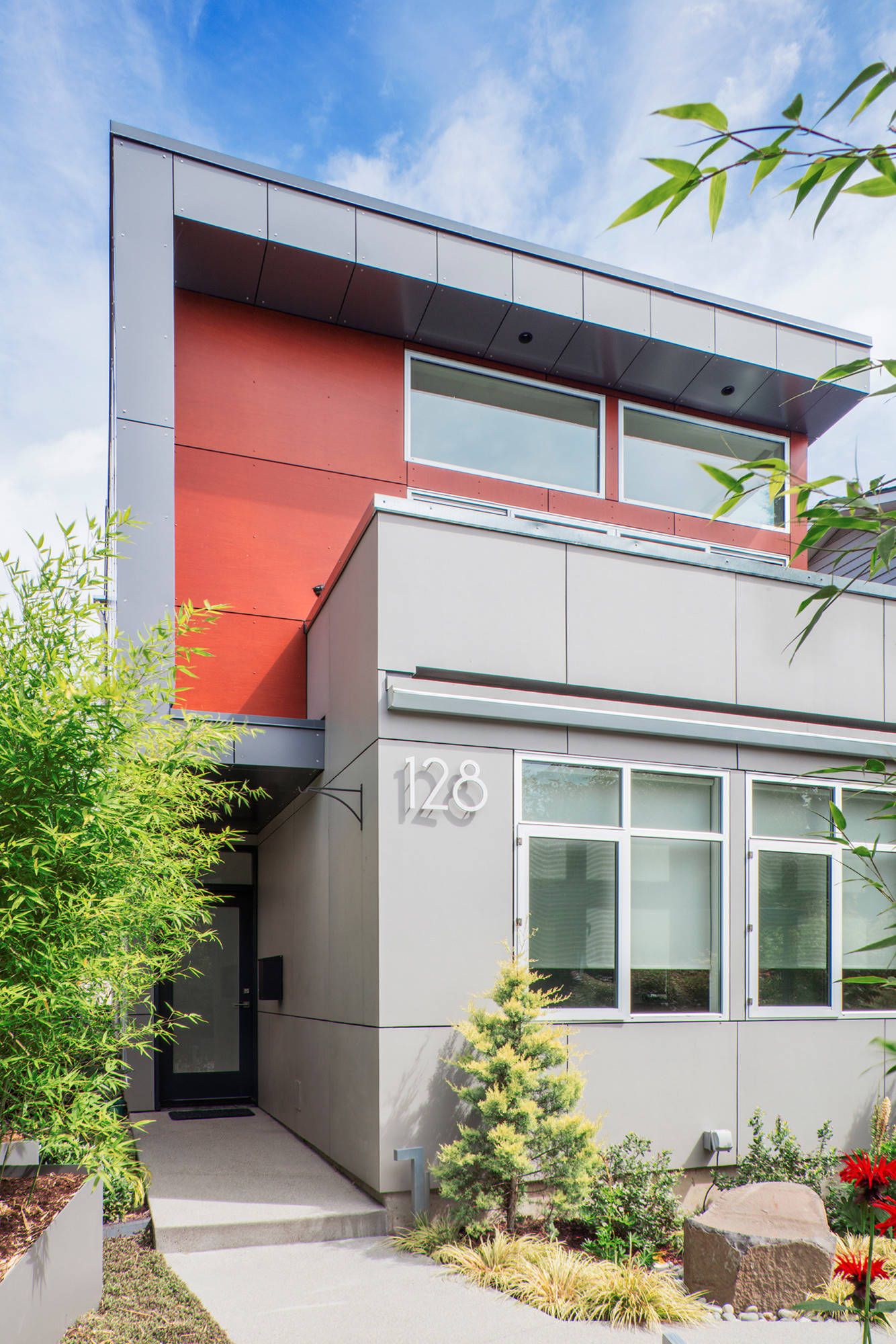
Red is bold and brave, no matter how you use it. But using red as an exterior house color will make your home stand out in your neighborhood. Which is not a bad thing when your contemporary neighborhood is mostly black.
 View in gallery
With all f its shades, green is a wonderful color. So why not choose an exterior space to paint your choice of green and create the most relaxing space in the city? Imagine having a glass of wine on the patio, watching the sun set over your green house and you'll need no more persuasion.
 View in gallery
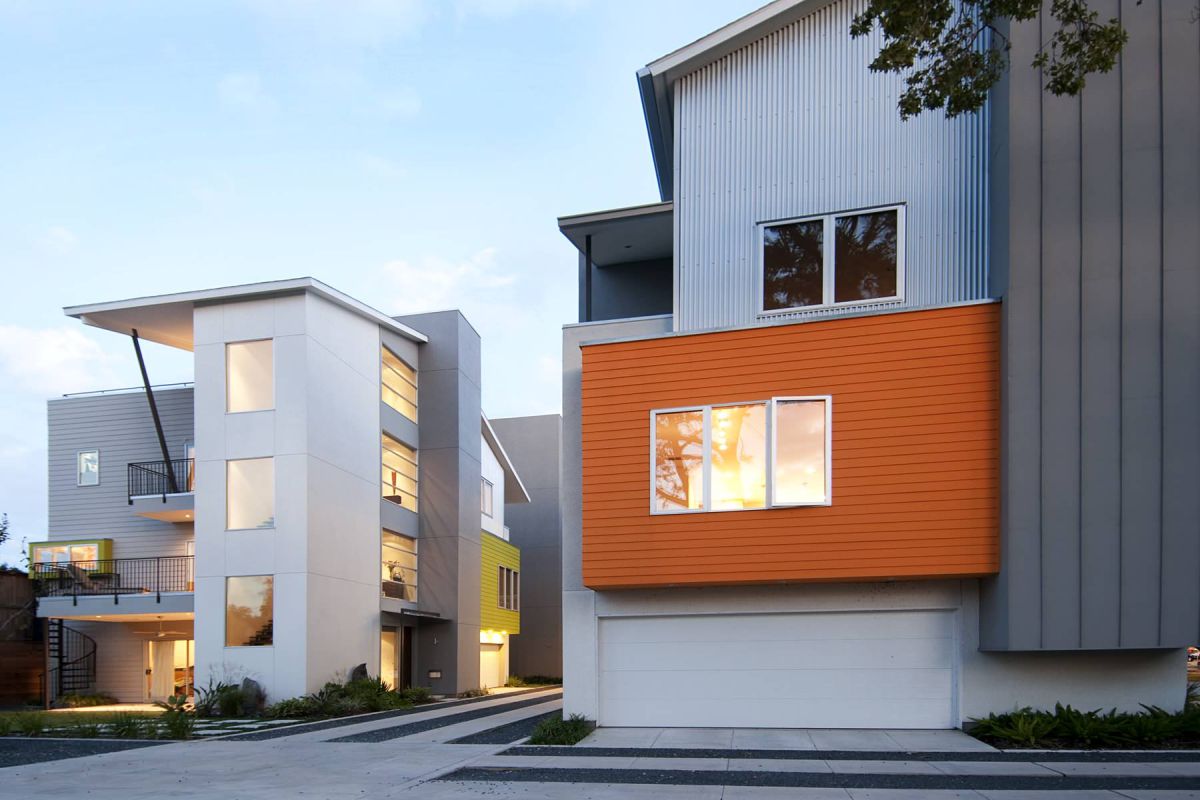
Maybe you live in a place that is cold more months out of the year than not. Exterior happy colors are sure to make you smile more than gray and black colors against a cold sky. Try adding some orange to your contemporary exterior and you'll find that you can't help but smile more often.
 View in gallery
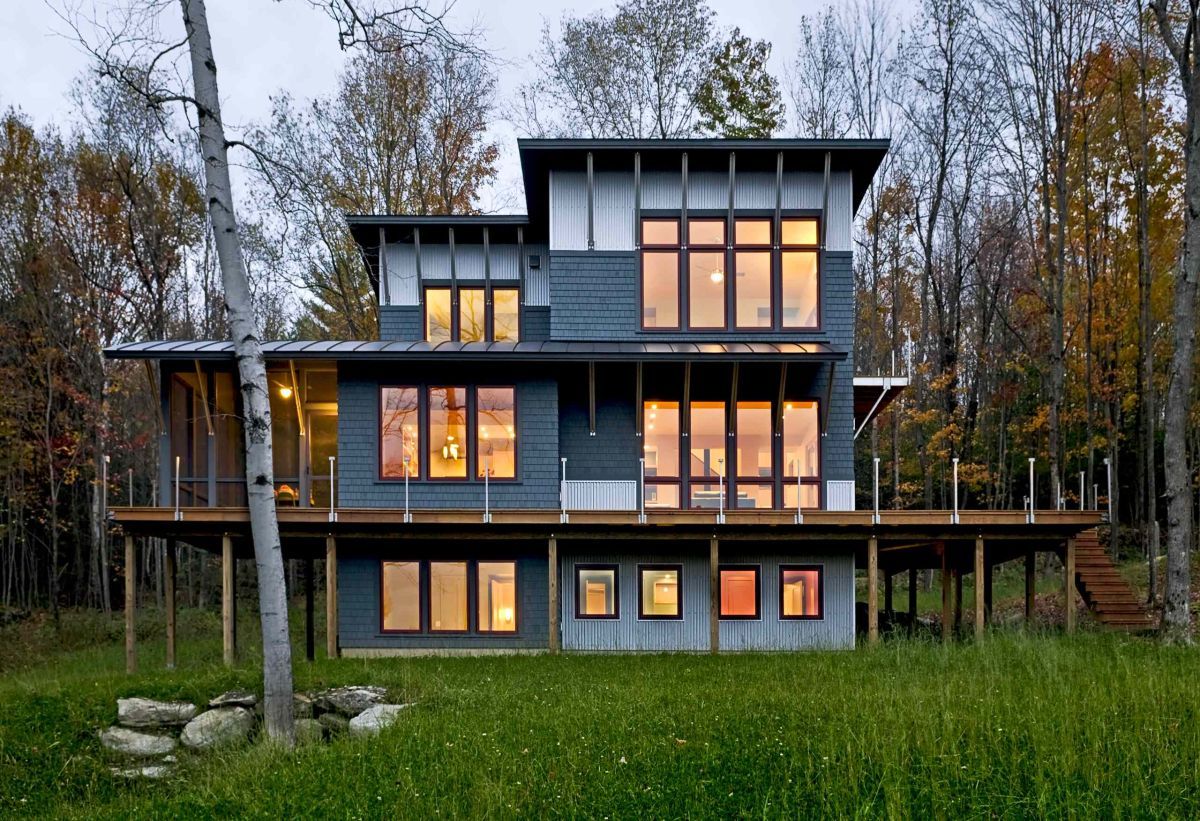
Is your contemporary home surrounded with classic-styled homes? Or maybe your large windows overlook the beach. Go for a dark blue exterior to help your place blend a little more with the locals.
 View in gallery
Speaking of the beach, you just have to consider pink for a contemporary beach pad. It's a cheery color will make your home the pride of the neighborhood and the envy of all passersby.
 View in gallery
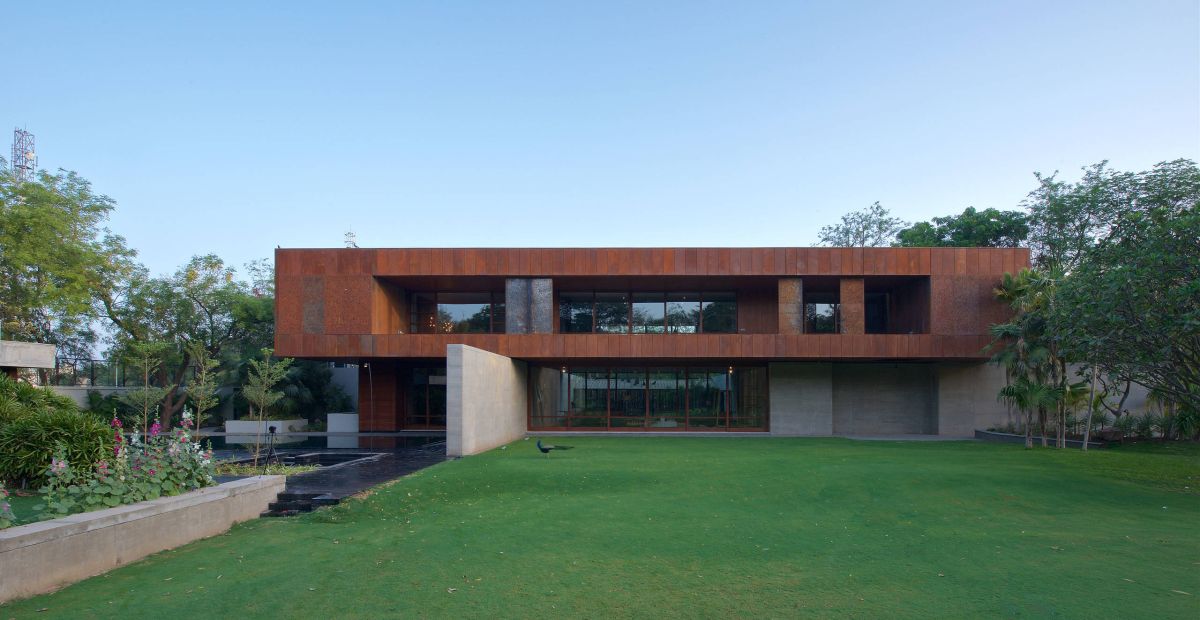
Are you looking to bring touches of rusticity into your contemporary home? Start with a rusty red shade for your exterior house color. You don't want a barn red, but rather an orang-y red like you'd find on old tractors and vintage wheels.
Ranch house style color
This style of home has been called an "architectural stepchild" because it continues to be disrespected, but the truth is, it's very popular and offers opportunities to upgrade curb appeal. With more people trying to age in place, the ranch home is a very livable, longer-term option so using paint to update what is sometimes considered a "cookie-cutter" look is easy and effective. Painting dated elements like red brick and updating elements like shutters and other accents are very effective. With regard to the range of colors that is appropriate, it is wide and varied.
Related: Everything You Need To Know About Ranch Homes
 View in gallery
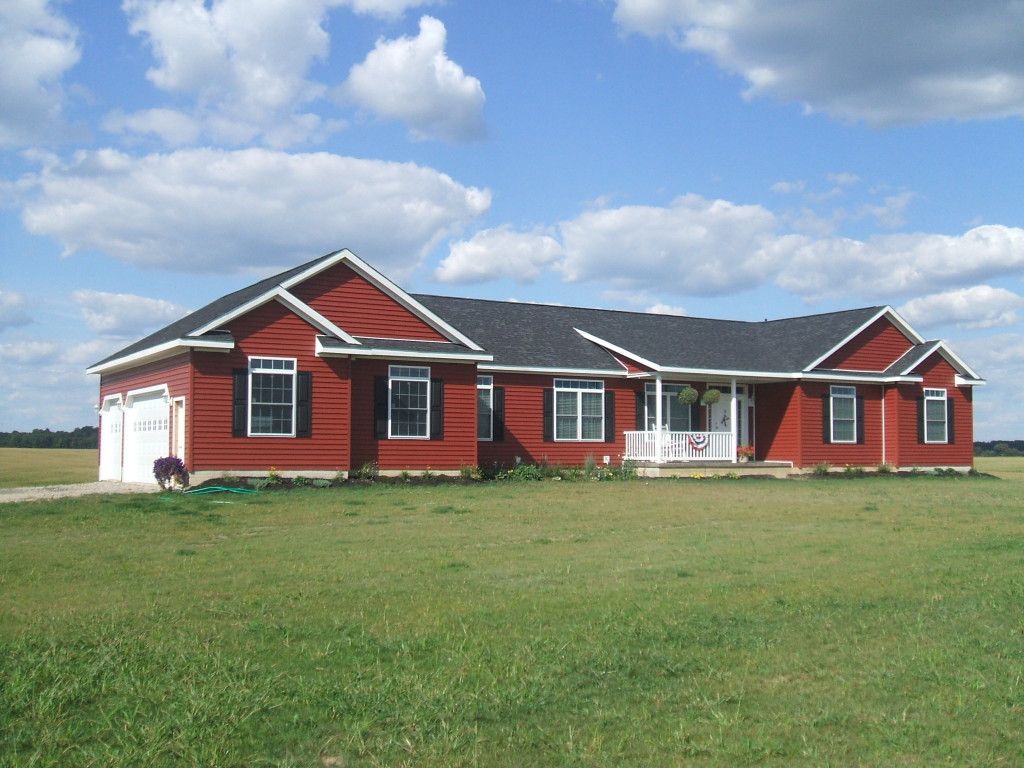
A sprawling ranch house usually competes with red barns like the one in the background. Go for that same red on the exterior of your home and your whole property will look like the picture perfect farm.
 View in gallery
Black on a ranch house? That's right. If you find that your ranch house is a too traditional for your chic modern tastes, try painting the exterior black. Suddenly you've remodeled the entire feel without having to pack up and move.
 View in gallery
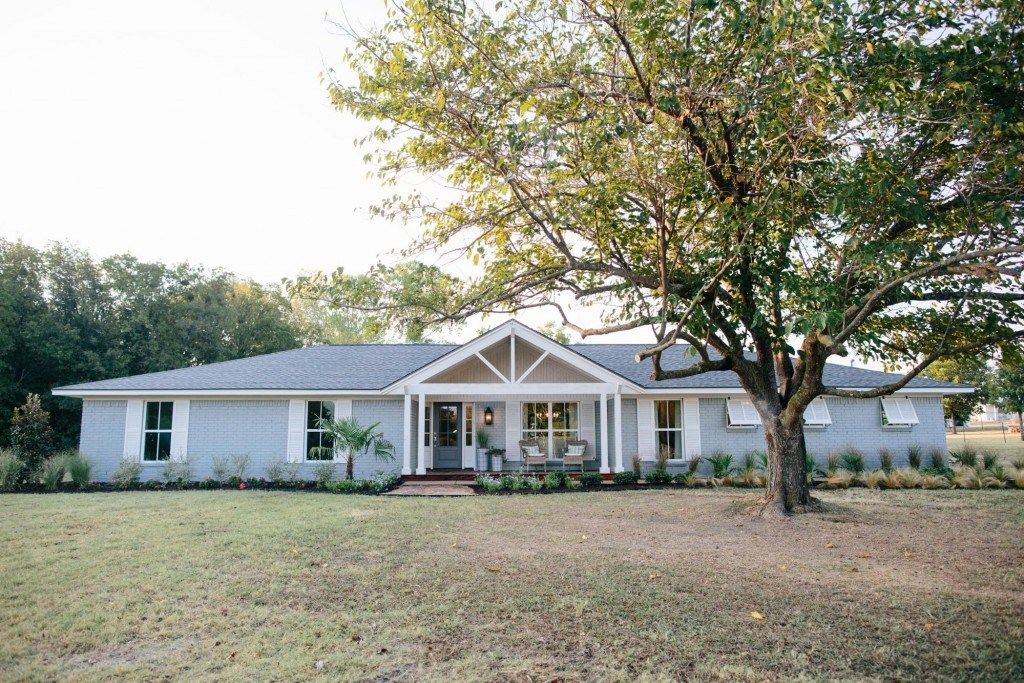
Pastel blue is such a pretty exterior house color. While it might look too sappy sweet for a home with siding, a brick ranch is the perfect canvas for this shade. The brick texture will give it enough interest to help your exterior feel light and homey.
 View in gallery
Many of us wish we lived in a cabin in the woods, and if you're ranch house is surrounded by trees, you can get that look easier than you think. Just go with a brown siding, wood or paint, and your everyday home will look like a vacation house immediately.
View in gallery
Deep forest green is another exterior house color that evokes images of summer camp hikes and National Park cabins. So, painting your ranch house with this dark shade will give your space the feel of getting away… without actually going anywhere.
 View in gallery
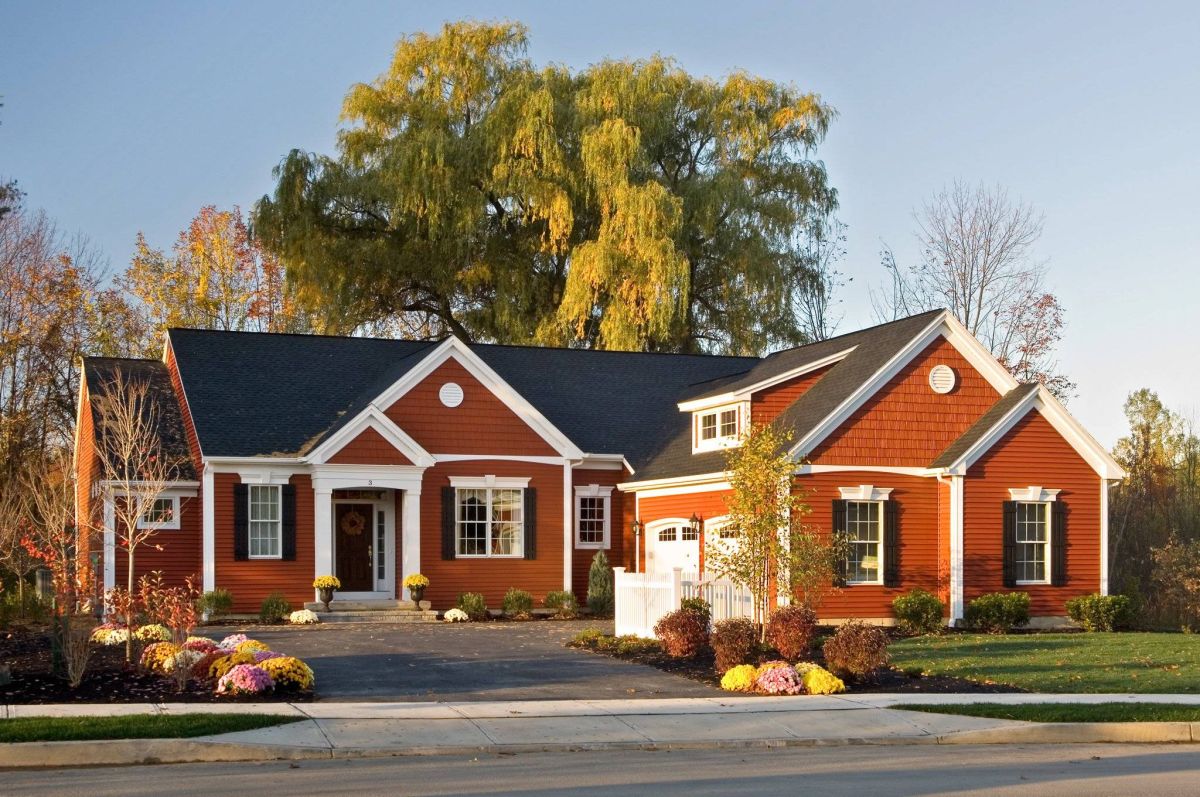
With the traditional vibes that most ranch houses have, you want to stay on the jewel tone side of things. Especially with colors like orange. Nobody wants a house that looks like a pumpkin, so opting for something warmer will help your ranch feel homey instead of straight out of the garden.
 View in gallery
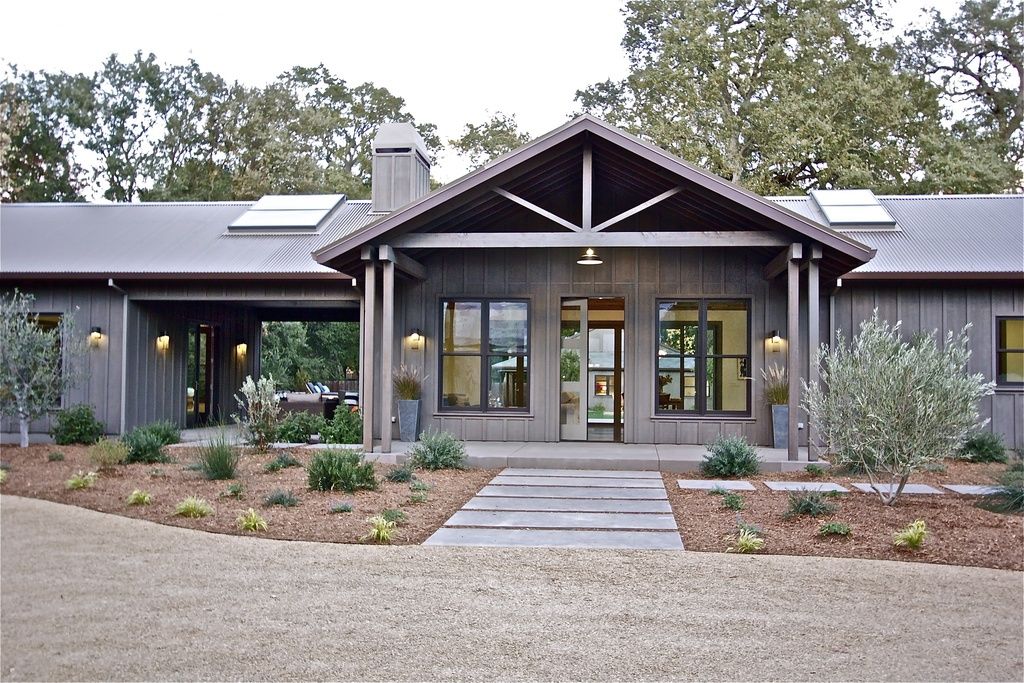
Gray is such a lovely exterior house color, especially when painted over wood or brick so you get the texture to stand out. Since most ranch homes have one or the other, gray makes the perfect exterior solution.
 View in gallery
With wood trim, brick accents, and gorgeous landscaping, sometimes you need an exterior house color that complements your home instead of making a statement. Sage green is coming to your rescue. It's soft shade will show off all the other great elements about your home's exterior without asking for attention.
 View in gallery
White ranch houses are not to be ignored. The style allows a normal home to look like a classic farmhouse that has housed a family for generations. Plus you'll love the way your Christmas wreaths stand out against the creamy tone.
 View in gallery
Of course if you love brick, you probably aren't thinking about completely repainting your ranch house. Consider giving it a light brush over to soften the orange-y red shade into a welcoming country tone.
Midcentury Modern house style color
Midcentury Modern (MCM) homes are super hot right now and millennial buyers love them for their retro flair, great floor plans, and distinctive exterior house colors. And, while you want a paint job to enhance the curb appeal of your home, the last thing you want to do is hurt the resale value or diminish its appeal. Light colors or earth tones are the classic choices for MCM homes, but the range of options is wide open, assuming you don't cover up or eliminate classic features like wood, stone or concrete blocks.
Related: How to Achieve a Mid-Century Modern Style
View in gallery
Midcentury modern homes are made to be eye catching. Usually there will be a bright color somewhere on the exterior. So, going with a neutral gray exterior house color will help direct the eyes where you want them to go, like your bright front door.
 View in gallery
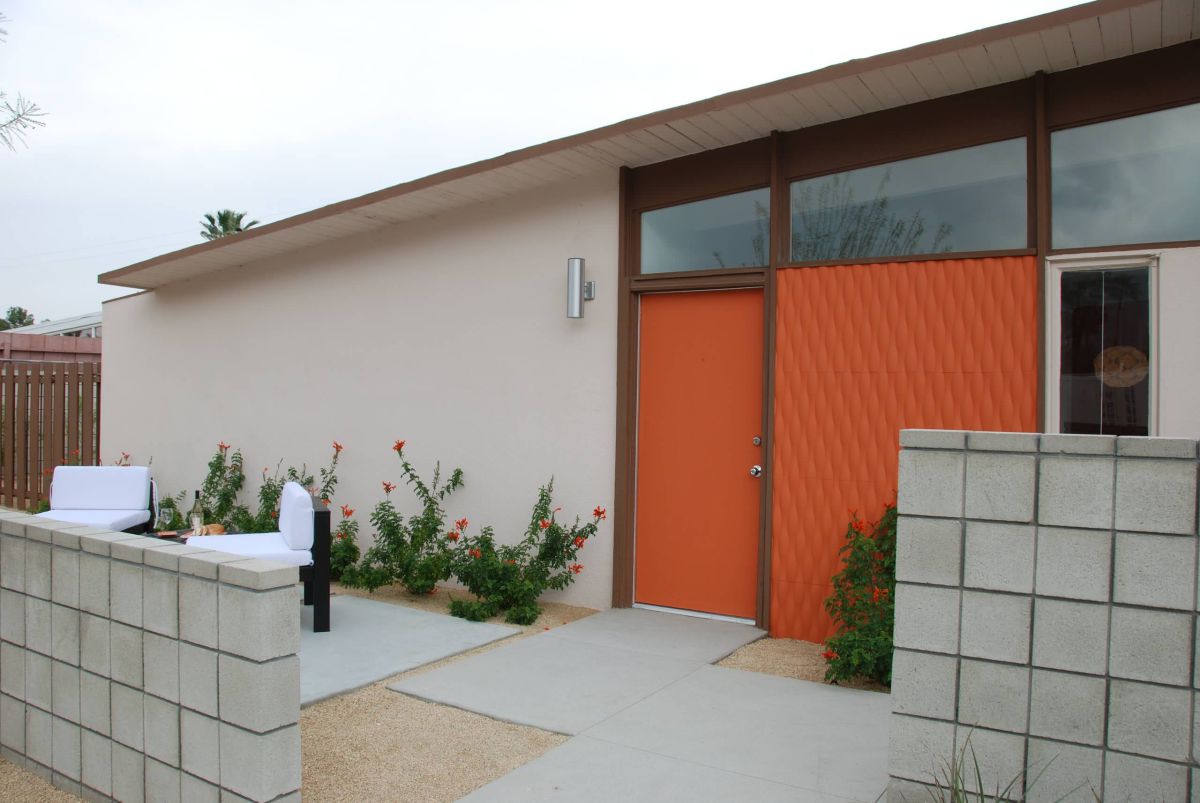
Your front door doesn't have to be the only orange feature of your home. Choose a piece of exterior wall and paint it the brightest orange you can find. Chances are the rest of your house will be something neutral so it won't be too overwhelming.
 View in gallery
Who can resist blue, in any shade? If your midcentury modern home has a good bit of wood in the design, blue makes a great complementary exterior color. Dark or light, it will feel well rounded and personalized when you're finished.
 View in gallery
It might be yellow painted siding, it might be yellow stained wood. However when you include it, that mustard-yellow hue is the epitome of midcentury modern design. Most likely you have a piece of furniture in your house to take your inspiration from.
 View in gallery
Are you thinking you'd rather focus on modern and less on mid-century? Paint your house black. Yes, the whole exterior if you can. The inky color will help your house feel more contemporary and pulled together.
 View in gallery
While we've discussed orange and yellow, let's not forget neon green. Another classic mid-century modern color, it will look stellar against the other modern architecture of your home and feel true to style.
 View in gallery
Red isn't resigned to barns and ranch houses. It can look great on your midcentury modern exterior too! In a deep enough shade, it will make any stone or wood pop which is exactly the effect you want on this accent heavy home.
 View in gallery
Looking to get away from beige without actually getting away? Go darker. Brown looks good on basically everything so your exterior will feel modern and classic at the same time. Not many colors can say that for themselves.
 View in gallery
It's almost blue, but not quite, but with sea green. you'll achieve the calming attributes and have the opportunity to add eye-catching colors. And if it's not beige, then it's a win for everybody.
 View in gallery
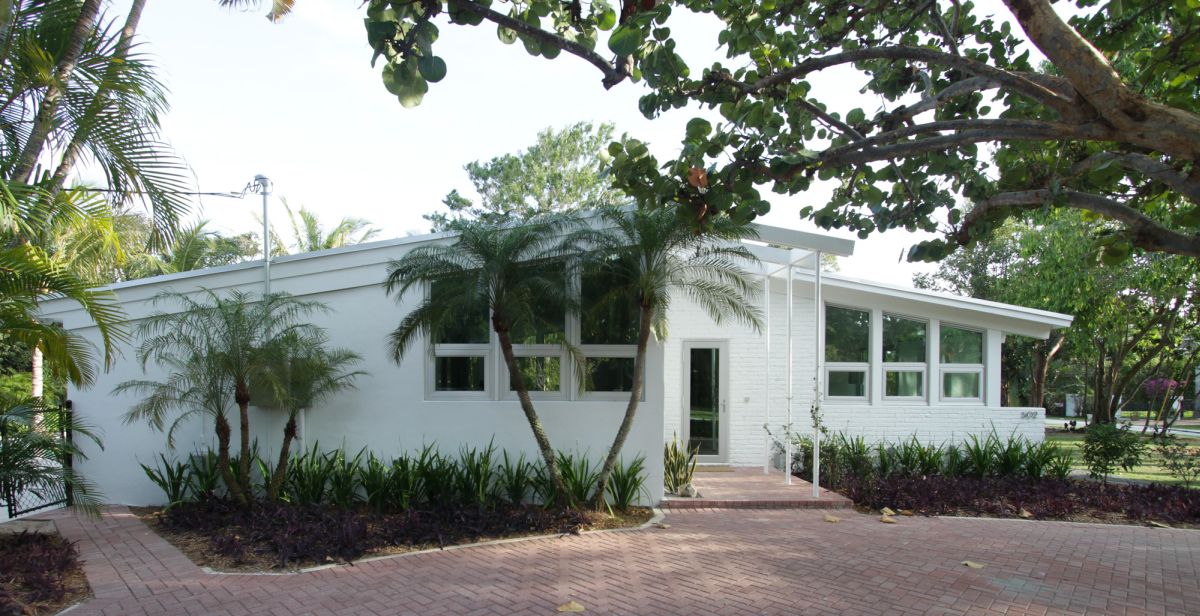
You know there is a white exterior for every home style. But when a color can do so much for your exterior, bringing you a fresh look on an old house, you can't say no. White will make your large midcentury modern windows pop.
Cottage house style color
Cottage style can be wide-ranging, but it's always casual and never stuffy. Often, where your home is located can drive the specific cottage vibe, such as a suburban neighborhood compared to a beachside cottage. Regardless, the appeal of these homes is rooted in the eclectic range of looks and the ability to customize the color and style to your own taste.
Related: How to Achieve a Cottage Style
 View in gallery
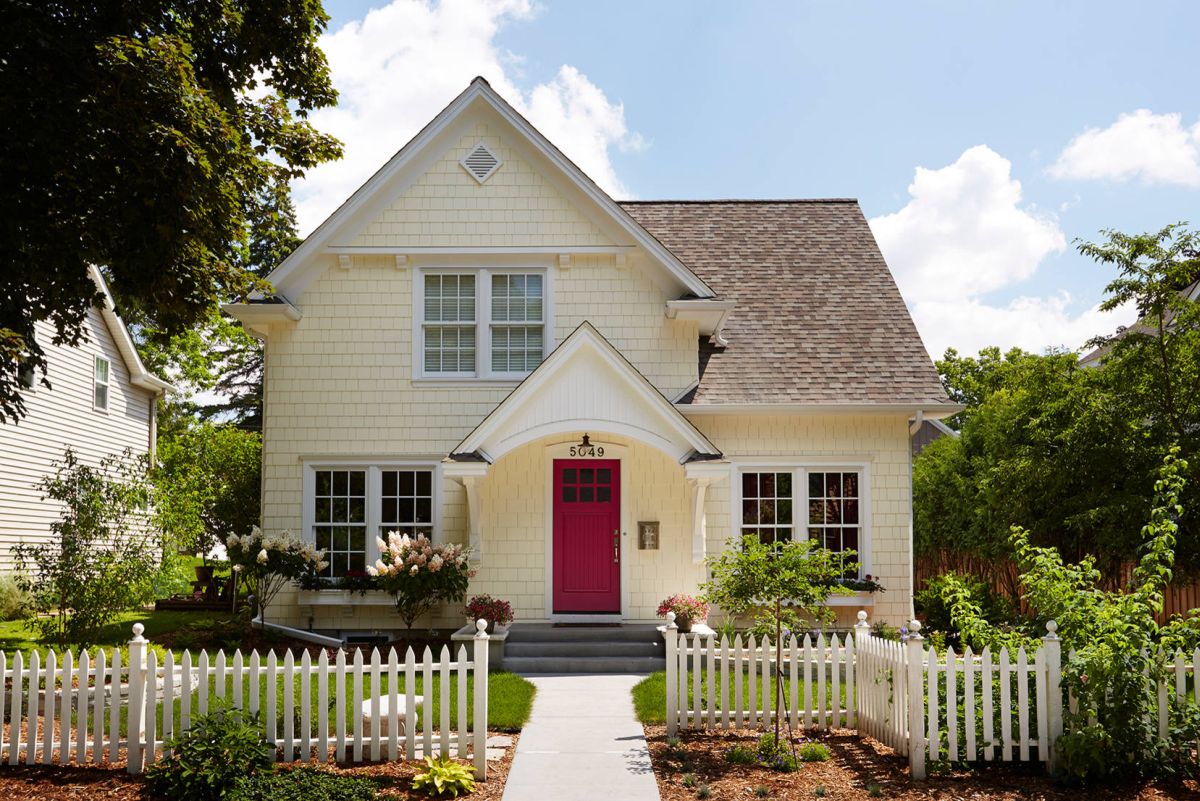
Cottages are possibly the best houses because they can incorporate so many styles. As long as it's small, it qualifies as a cottage. In this case, the buttery yellow on this exterior gives you the coziest outlook ever.
 View in gallery
For the cottage that overlooks a lake, you absolutely must consider painting the exterior a shade of blue. It can be dark or even pastel, but to get that perfect lakeside cottage look, it must be blue.
 View in gallery
Lots of cottages pride themselves in full flowerbeds and ornate landscaping. Choosing a gray exterior will help make your flowers and trees and bushes the stars of the show, as they should be.
 View in gallery
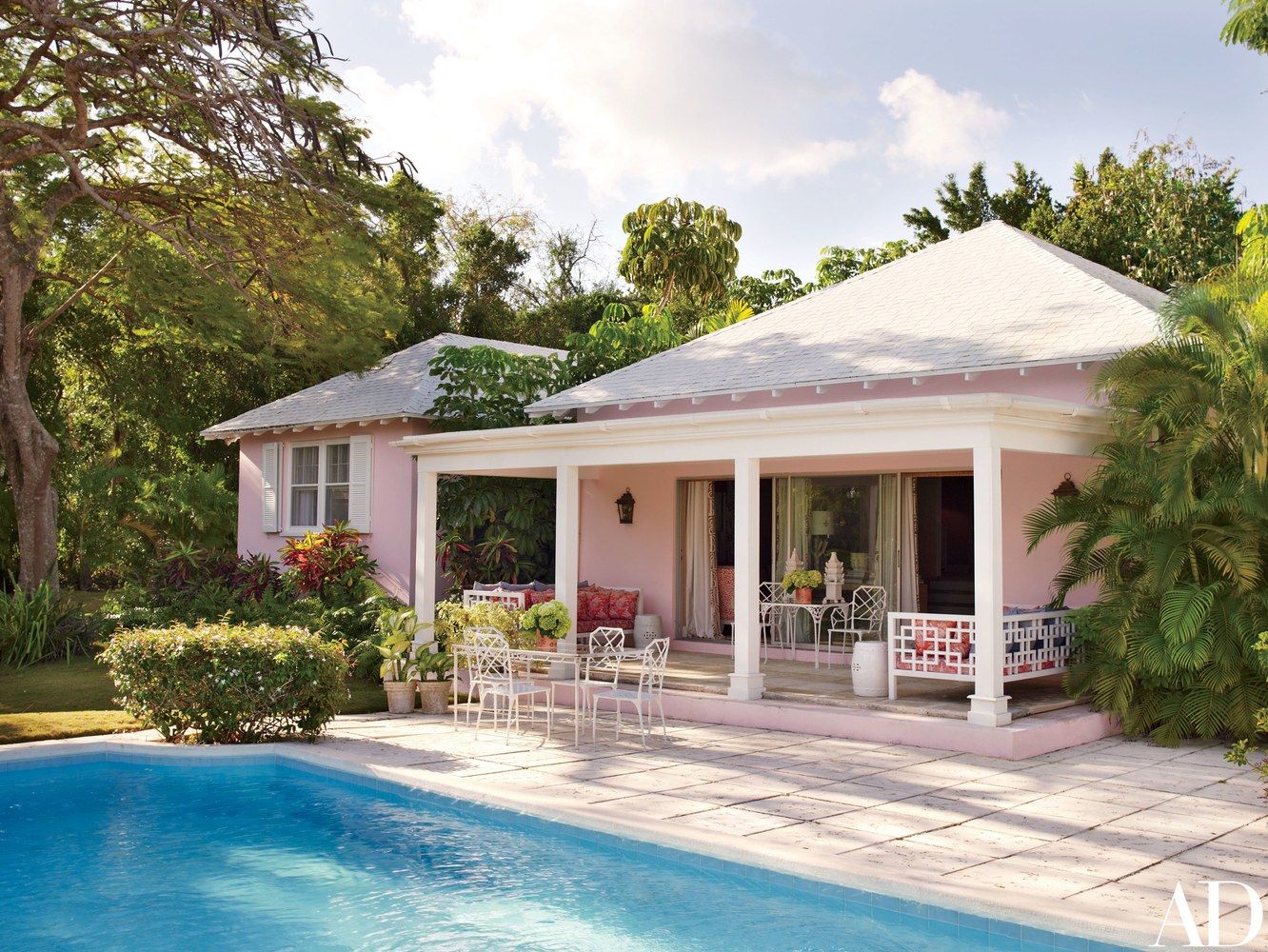
A pink cottage? It sounds like something out of a storybook. Except it really does exist and it looks like the most summery cottage ever. So while you probably wouldn't paint your cold weather cottage in this rosy shade, you certainly should think about it for your hot weather house.
 View in gallery
A red cottage is a country cottage. It will look stunning against the flowers of spring, the greenery of summer, the colors of fall and the Christmas lights of winter. You just can't go wrong.
 View in gallery
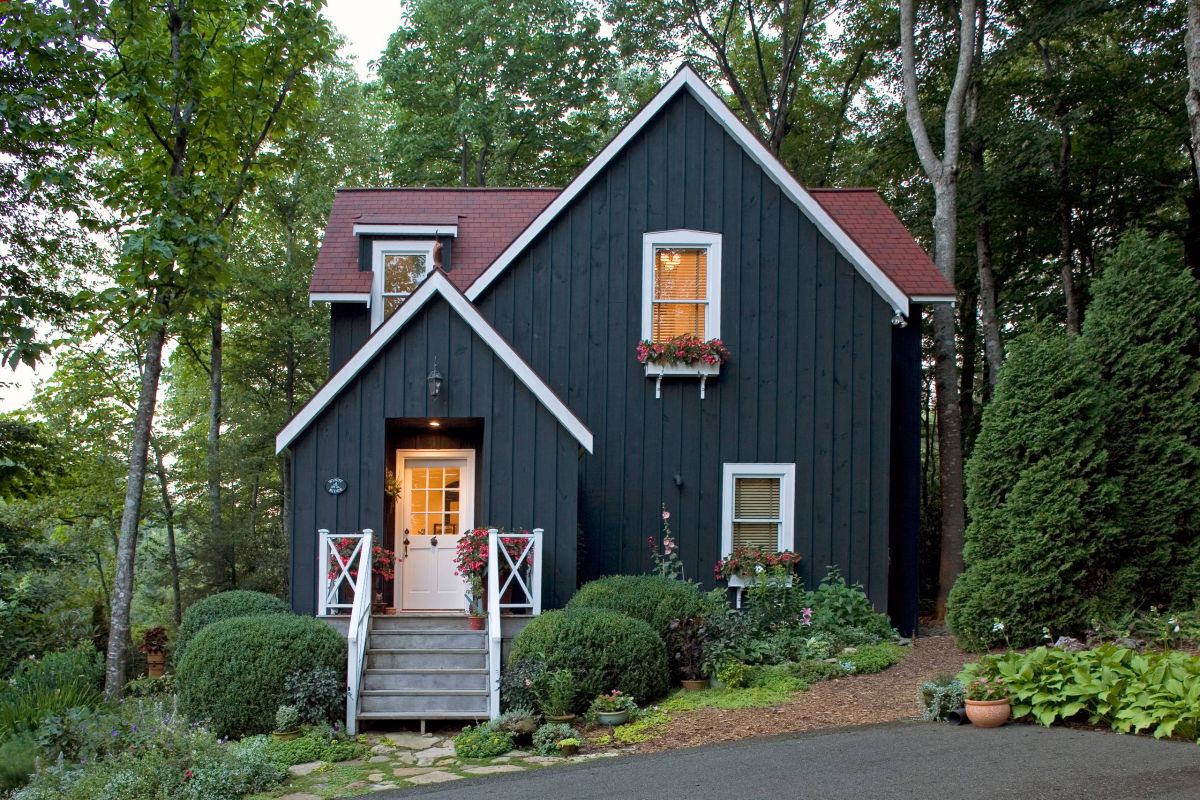
Do you live in a little house in the woods? Take a hint from the colors around your place and paint your exterior the deep deep green you're longing for. It will help you begin to create a retreat from the world from the outside in.
 View in gallery
Maybe you live by the ocean or at least close enough to smell the salt in the air on windy days. Give your cottage the perfect beachy feel with an aqua-colored exterior. Your cottage will be the cutest on the block.
 View in gallery
Pastel green is such a cottage color. Paired with wood accents and the greenery of your landscape, you will feel like you come home to the sweetest British cottage every day.
 View in gallery
Just because it's small and cute on the outside doesn't mean it needs to be a "cute" pastel color. A strong bold black will give your family a modern place to hang out when you've had enough of the small square footage.
 View in gallery
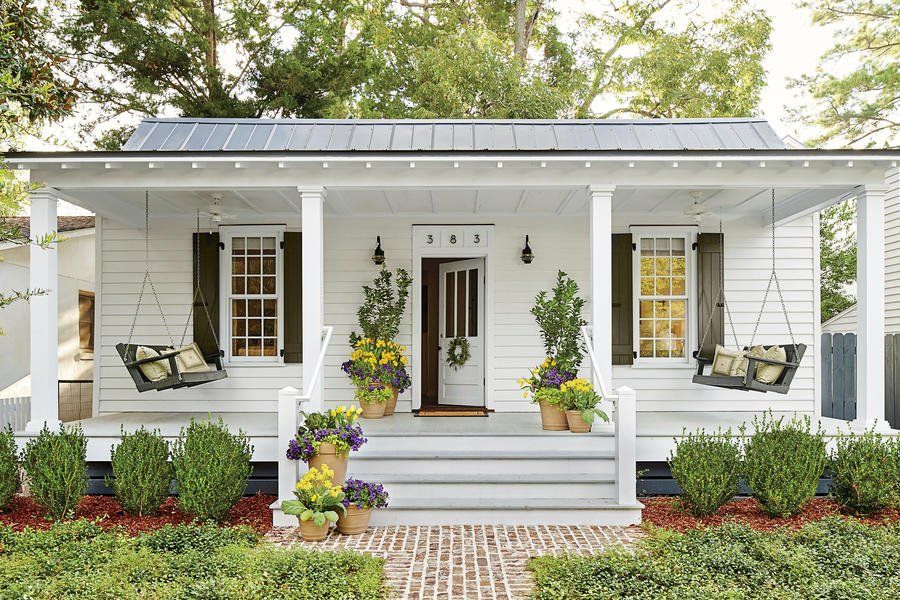
White is a cottage's best friend. It speaks of flower blooming, lemonade sipping, country living without actually saying a word. Plus white makes landscaping easy as pie since anything and everything will match your exterior.
FAQ
What's is the best house exterior colors?
The geographic location of your home plays a role in your choice of an exterior paint color but certain shades are just more popular. The most frequently chosen colors include white, off-white, yellow, light blue, gray, blue gray, taupe, putty, wheat, brown green and red.
How do I choose an exterior color combination?
Pick a color you like that fits with its surroundings. The color should also improve the curb appeal of your house. You'll also need to choose a second color for the trim and possibly a third for any other accents on the house.
Which exterior house colors have positive energy?
According to ancient arts such as Feng Shui, colors bring with them various feelings and moods. In this theory, arranging your living spaces in a way that is in balance with nature is key. In Feng Shui, the direction the house is facing factors into what colors are best to use. Consult a color chart if you are interested in feng shui.
What are the new trends in exterior house colors?
Trending colors can already be popular or they can be a new wave of options for your home's exterior. Currently the following colors are trending for exterior paint: Black, charcoal, warm white/cream, vibrant green, gray-green, and navy blue.
How much does it cost to paint a house?
On average, it costs from $3,500-$7,000 to paint the exterior of a house, according to Fixr. The average homeowner ends up spending about $5,362 to paint a home that has 1,500 square feet of wood siding, along with trim and the requires prep-work.
How long does it take to paint a house?
In general, the average-sized house takes a team of two to three people about three to four days to paint. Of course, this is assuming that the house has one or two stories and four or fewer bedrooms. A three-story house, or one that has five or more bedrooms. will need will five to six days for the painting process. Just as with the price, the time and steps required to paint the house will also be affected by a number of factors, if there is any damage to the surface that needs to be repaired.
How Often Should I Paint the Exterior of My House?
Of course, it depends on the climate and weather conditions where you live, but according to Five Star Painting, you should expect to repaint the exterior about every 10 years, but it might be as little as 7 years.
Conclusion
The bottom line is that painting your home is probably the fastest and most affordable route to giving the exterior a big refresh. Before you break out the paintbrush, however, be sure to consider the style of the home, your specific neighborhood location and any architectural features that will drive the new look. Finally, just don't lose sight of your personal style preferences in the process!
Small House Exterior Paint Design
Source: https://www.homedit.com/house-colors/

Post a Comment for "Small House Exterior Paint Design"